
Complete Guide to 3D Printed Tabletop Miniatures
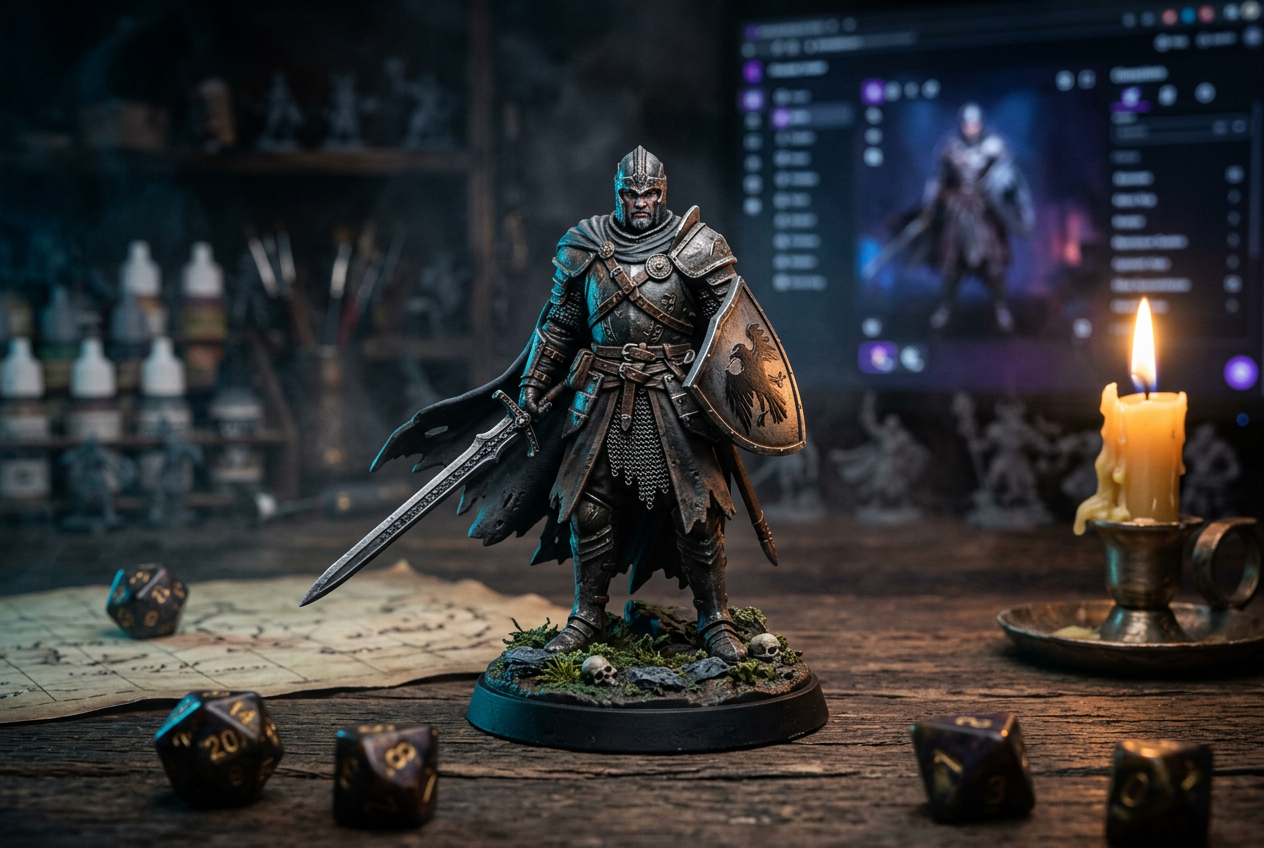
Complete Guide to 3D Printed Tabletop Miniatures
Your character exists in vivid detail in your imagination—down to the scar across their cheek and the notch in their blade. Generic miniatures from a retail shelf rarely capture that vision.
3D printed miniatures change the equation entirely, offering customization that was impossible just a few years ago. This guide covers everything from choosing between resin and FDM printing to building your own custom character step by step, so you can bring exactly the figure you envision to your table.
What Are 3D Printed Tabletop Miniatures
3D printed miniatures are figures built layer by layer using a 3D printer, designed specifically for tabletop RPGs, wargames, and collections. Unlike traditional injection-molded miniatures that come from fixed molds with limited designs, 3D printed minis can be produced on demand with virtually unlimited variety.
The most common material for detailed miniatures is resin, which captures fine features like facial expressions, weapon engravings, and armor textures. You might also hear about FDM printing (which uses plastic filament), though resin remains the go-to choice for character-scale figures where detail matters most.
Why 3D Printed Minis Are Perfect for Tabletop Gaming
Players and dungeon masters are turning to 3D printed options more and more, and the reasons come down to flexibility, cost, and quality.
Unlimited Customization for Unique Characters
Your character isn't generic, so why settle for a generic miniature? With 3D printed minis, you can design a figure that matches your exact vision, from the specific race and pose down to the weapon in their hand.
A tiefling warlock can actually look like a tiefling warlock, complete with curved horns and tattered robes, rather than a "close enough" substitute from a retail shelf.
More Affordable Than Traditional Miniatures
Boutique metal or hand-sculpted miniatures often run $15–$40 or more for a single figure. STL files (the standard 3D model format) typically cost a fraction of that price, and once you own a file, you can print as many copies as you like.
Even ordering custom-designed characters through print-on-demand services tends to cost less than premium retail miniatures, especially when you factor in the level of customization you're getting.
Faster Access to the Exact Figure You Need
No more waiting for restocks or scouring eBay for discontinued sculpts. The 3D printing ecosystem puts thousands of designs at your fingertips, available immediately.
Looking for a specific monster for tomorrow's session? Or a unique NPC to surprise your players? You can find or create exactly what you envision, often within minutes.
Exceptional Detail That Painters Love
Modern resin printing technology produces miniatures with extraordinary detail, capturing subtle features that were once impossible outside of master sculptors' studios. Fine chainmail links, delicate jewelry, and expressive faces all come through with remarkable clarity.
If you enjoy painting miniatures, you'll appreciate how crisp details give you more to work with. Washes settle into well-defined recesses, and highlights pop on sharp edges.
How to Get 3D Printed Miniatures
There are three main paths to acquiring 3D printed miniatures, each suited to different situations and equipment.
Buy Pre-Printed Miniatures Ready to Paint
If you don't own a 3D printer, this is the simplest option. Online shops and independent printing services handle everything. You browse their catalog or design your own mini yourself like at ANVL, place an order, and receive a finished resin miniature ready for priming and painting.
Download STL Files and Print at Home
If you own a 3d printer, downloading STL files gives you the most flexibility and lowest per-miniature cost. Platforms like ANVL host dozens of starter designs, and infinite options for customizing your own STL file ready to print.
An STL file is simply the 3D model in a format your printer's software (called a slicer) can read. Many files come "pre-supported," meaning the creator has already added the temporary structures needed for successful resin printing.
Use a Custom Character Creator Online
Character creator tools bridge the gap between pre-made designs and full custom sculpting. You build your character step by step, selecting race, pose, equipment, and details, then either order the physical print or download the STL file for home printing.
How to Build Your Own Custom 3D Printed Character
Using an online character creator is the easiest way to design a personalized miniature. Here's what the process typically looks like:
1. Select Your Race and Gender
Simply navigate to the race selection screen and choose from options like Human, Dwarf, Orc, Elf, Dragon, or Catfolk. Male and female variants are usually displayed side by side for easy comparison.
Many tools include a "Generate a random character" button, which is a great way to spark inspiration if you're not sure where to start.
2. Customize Head and Body Features
After selecting your base, you can fine-tune proportions using simple controls. Look for "+/−" buttons or sliders in sections like "Head" to make precise adjustments without dramatic jumps.
3. Choose Clothing and Hand Held Items
This is where your character's class and personality come through. Browse libraries of armor sets, robes, cloaks, weapons, shields, and accessories to match your character's story.
A paladin might get gleaming plate armor and a longsword, while a rogue could carry twin daggers and wear a hooded cloak.
4. Pick a Unique Base for Your Miniature
The base grounds your character in a setting. Options typically include cobblestone for urban adventures, grass for wilderness campaigns, dungeon flagstones, or more exotic choices like volcanic rock or arcane circles.
5. Set Stance Mount and Size Options
Finalize your character's presentation by selecting a pose from options like "Standing Idle" or action stances. If your character rides a mount, you can add one here, or select "None" for a standard figure.
Size settings (typically "Standard" for 28–32mm scale) ensure your miniature fits your game's grid and matches your existing collection.
6. Select Your Material and Complete Your Order
Simply navigate to the "Material" section and select "Resin" for a physical print with maximum detail. From there, you can save your design, add it to your cart, or select "Download" to get the STL file for home printing.
Resin vs FDM Printing for Tabletop Miniatures
The two main 3D printing technologies each have strengths worth understanding.
FeatureResin (SLA/MSLA)FDMDetail LevelExtremely fine, captures small featuresVisible layer lines on small modelsBest ForCharacter minis, detailed figuresTerrain, large piecesPost-ProcessingRequires washing and curingMinimal cleanupPrint SpeedSlower per pieceFaster for big prints
Why Resin Delivers the Best Detail
Resin printers use UV light to cure liquid resin in incredibly thin layers, often 0.05mm or less. The result is smooth surfaces and captured details like individual chainmail links, tiny gemstones, and subtle facial expressions.
For character-scale miniatures where you want to see every detail, resin is the clear choice.
When FDM Printing Makes Sense
FDM (Fused Deposition Modeling) printers work by extruding melted plastic filament. While they leave visible layer lines on small figures, they excel at larger pieces where speed and material cost matter more than ultra-fine detail.
Terrain pieces, dungeon tiles, and large monsters often work well on FDM printers.
How to Paint Your 3D Printed Miniatures
Once your miniature arrives or comes off your printer, a few steps prepare it for painting.
Preparing and Priming Your Miniature
Resin prints require washing in isopropyl alcohol to remove uncured residue, then full UV curing to harden completely. After that, a thin coat of primer helps paint adhere properly.
Grey primer works well for most color schemes, though white brightens colors and black creates natural shadows.
Choosing the Right Paints for Resin Models
Acrylic miniature paints from hobby brands work beautifully on cured resin. You'll find starter sets at most hobby shops that include a range of useful colors, and they clean up easily with water.
Tips for Painting Fine Details and Highlights
Apply paint in thin, watered-down coats rather than thick layers. This approach preserves detail and prevents obscuring the fine features 3D printing captures so well.
Washes (thinned, dark paints) flow into recesses and bring out depth, while drybrushing catches raised edges for natural highlights.
3D Printed Minis for DnD Pathfinder and Wargaming
3D printed miniatures serve different purposes across game types.
Player Characters and NPCs for RPG Campaigns
In games like Dungeons & Dragons or Pathfinder, a custom miniature transforms your character from imagination to tangible reality. Dungeon masters can also print unique NPCs, like the mysterious merchant or the corrupt noble, making the world feel more alive.
Monsters Creatures and Boss Encounters
Why describe a monster when you can show it? Print any creature you can imagine, from goblin hordes to ancient dragons, creating memorable visual moments during combat encounters.
Army Units and Squads for Wargames
Wargamers benefit enormously from 3D printing's economics. Printing entire matching units costs a fraction of buying retail boxes, making it practical to field large armies with consistent visual themes.
Ready to Create Your Perfect Custom Miniature
Sound like fun? It is! Whether you're designing your first character or your fiftieth, the ability to create exactly the miniature you envision, then hold it in your hands, never gets old.
ANVL's character creator lets you choose from a huge selection of races, customize every detail from gear to pose, and order in high-quality resin or download the STL file for home printing.
FAQs About 3D Printed Miniatures
Do I need a 3D printer to get custom miniatures?
Not at all. You can order pre-printed miniatures from online shops, or use a custom character creator that handles printing and ships the finished figure directly to you. A printer only becomes necessary if you want to print STL files at home.
How long does it take to receive a 3D printed mini after ordering?
Most print-on-demand services ship within two to three weeks, though timing varies based on order complexity and your location. Custom character creators typically provide estimated delivery times during checkout.
What scale are most tabletop miniatures printed at?
The standard scale is 28mm to 32mm "heroic" scale, which fits 1-inch grid battle maps used in most RPG systems. This size is compatible with most tabletop games and matches the majority of existing miniature collections.
Are 3D printed resin miniatures durable enough for regular gameplay?
Yes, fully cured resin miniatures handle normal tabletop use without issues. Like any miniature material, they can chip or break if dropped on hard surfaces, but they're comparable in durability to traditional plastic or metal figures.
Can I download my custom character design as an STL file?
Some character creators, including ANVL, offer a download option alongside physical printing. This lets you take the STL file and print the character at home on your own resin printer whenever you like.

